
If a pimple has ever healed and left a dark mark that stayed for months, you already know pigmentation on Indian skin plays by its own rules. It’s not bad luck, and it’s not something you did wrong. It’s biology.
What Fitzpatrick III-V actually means
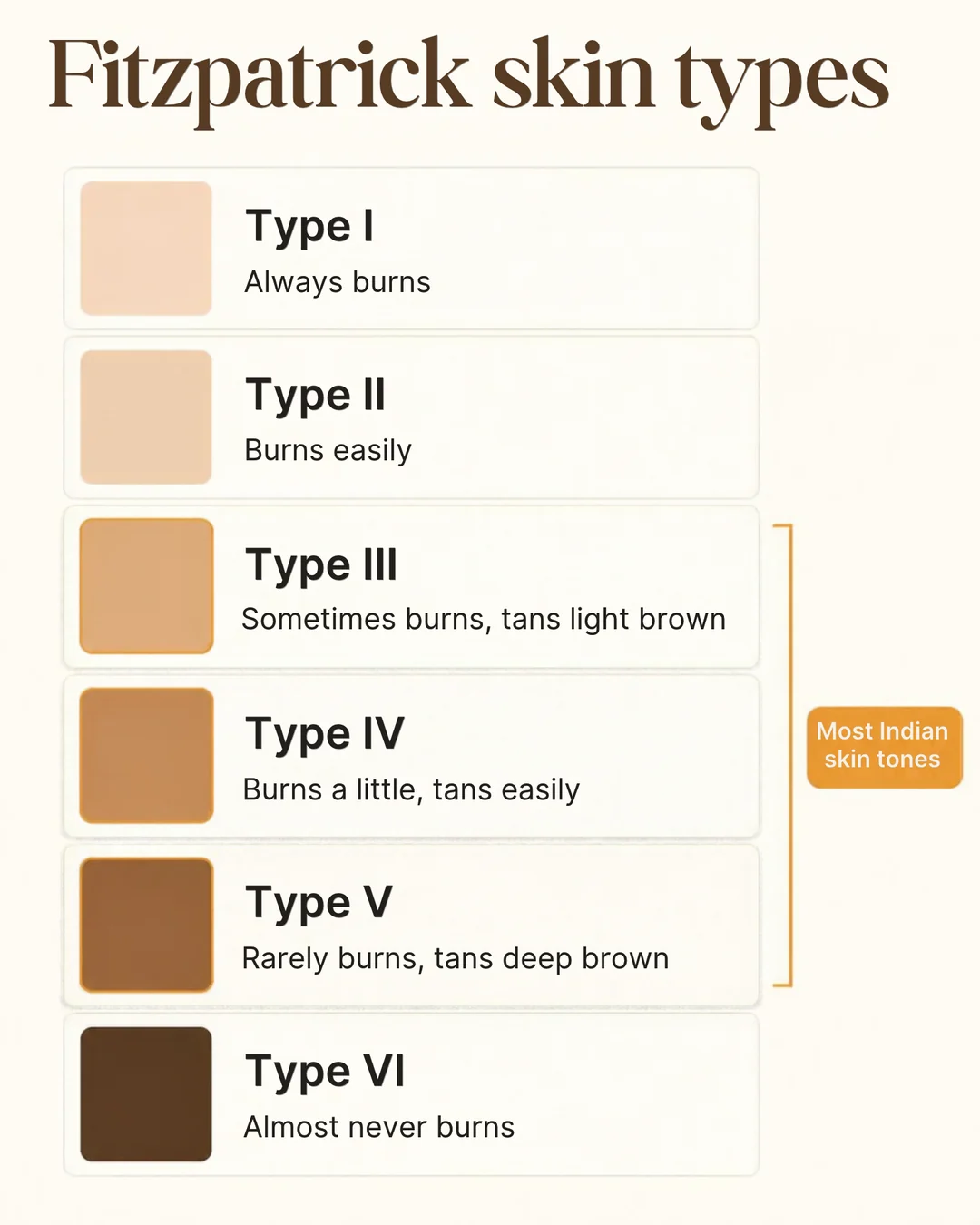
The Fitzpatrick scale sorts skin by how it reacts to the sun. Type III sometimes burns, then tans to light brown. Type IV burns a little and tans easily. Type V rarely burns and tans deep brown. Most Indian skin tones fall somewhere between III and V.
A lot of skincare research has historically centred on lighter skin. So advice that works well for type I or II doesn’t always translate to ours.
How melanin works in deeper skin tones
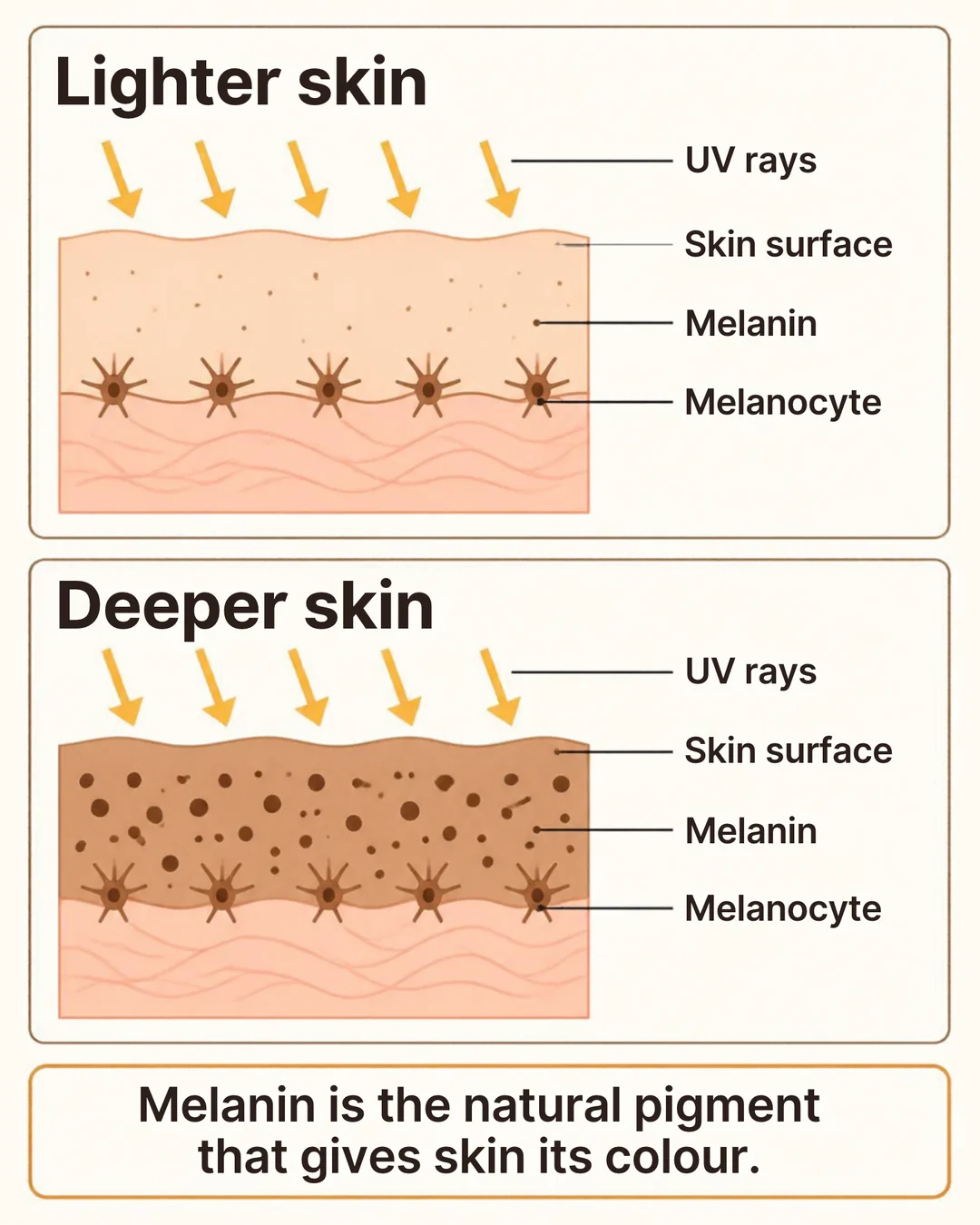
Everyone has a similar number of melanocytes, the cells that make melanin. The difference is how active they are. In deeper skin tones, melanocytes make more melanin, packed in larger pigment granules that sit spread out across the skin.
That melanin gives you natural protection from UV. It also means your melanocytes react quickly to anything that irritates the skin.
Why pigmentation on Indian skin stays so long
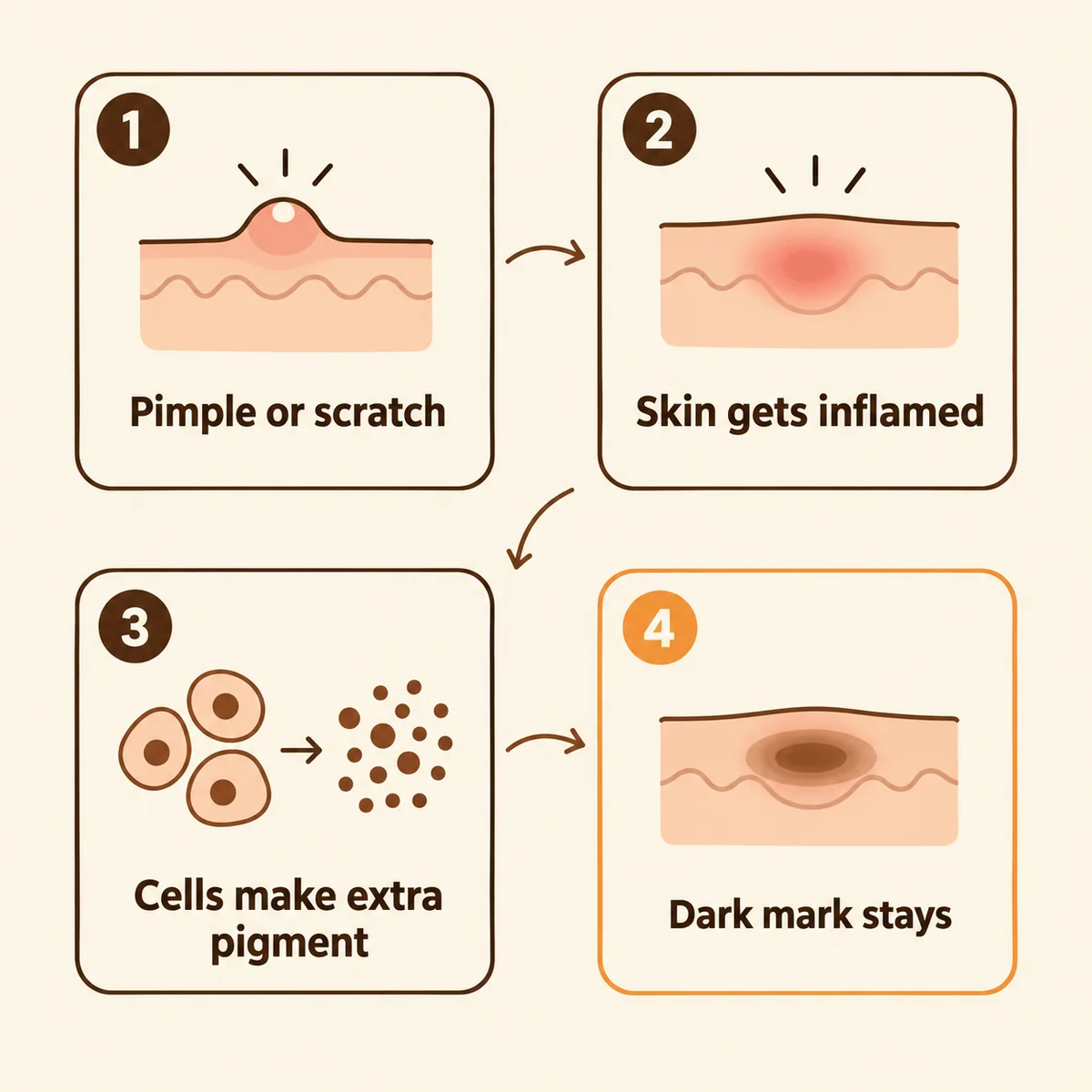
Dermatologists call it post-inflammatory hyperpigmentation. In plain words: skin gets inflamed, and the melanocytes respond by making extra pigment. The trigger can be acne, a bug bite, a scratch, or a scrub that was too harsh. In Fitzpatrick III-V skin, that response is stronger and the marks tend to last longer.
Melasma, the patchy darkening that often shows up on the cheeks and forehead, is also common. Sun, heat and hormones can all set it off. Research also suggests that visible light, not just UV, can deepen existing pigmentation in medium to deep skin tones. So even a day mostly indoors near a bright window counts.
What actually helps
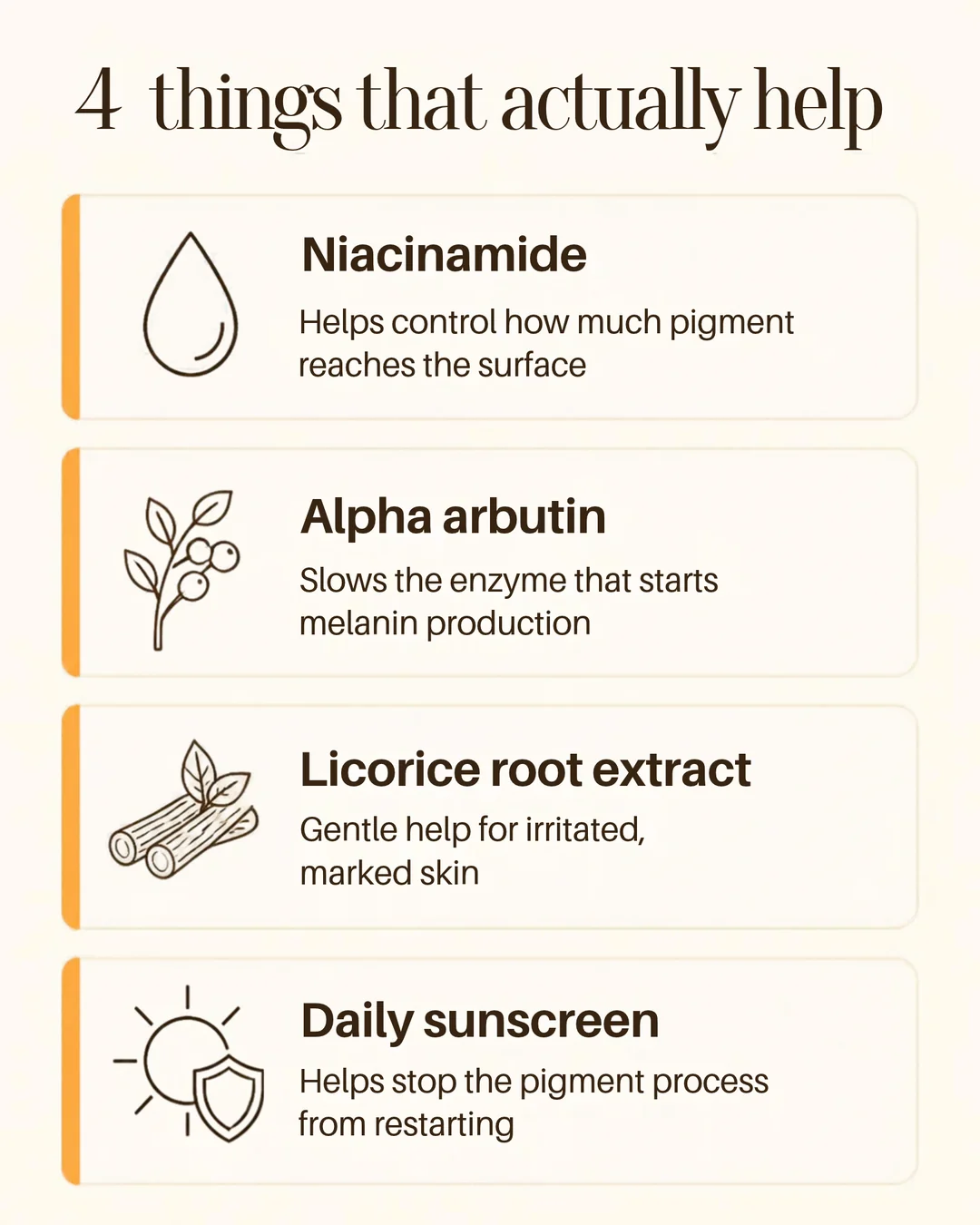
There’s no overnight fix, but a few well-studied ingredients do the job steadily:
Niacinamide helps limit how much pigment gets passed to the surface skin cells.
Alpha arbutin slows down tyrosinase, the enzyme that kicks off melanin production.
Licorice root extract works on the same pathway and is gentle on irritated skin.
Daily sunscreen matters most. Without it, the pigment process keeps restarting.
Our Niacinamide Face Serum combines niacinamide, alpha arbutin and licorice root, and it’s formulated for Fitzpatrick III-V skin. If you want the full routine in one go, the Bloom & Breathe Kit pairs it with a cleanser and moisturizer.

What to avoid
Over-exfoliating is the most common mistake. Scrubbing a dark spot to “remove” it irritates the skin, and irritation creates more pigment. Be gentle, and don’t pick at breakouts.
A quick word on home remedies. Lemon juice, baking soda and toothpaste are all popular online, but they can sting, dry out the skin and leave a darker mark than the one you started with. If anything burns or leaves your skin red for more than a few minutes, rinse it off and stop using it.
How long it takes
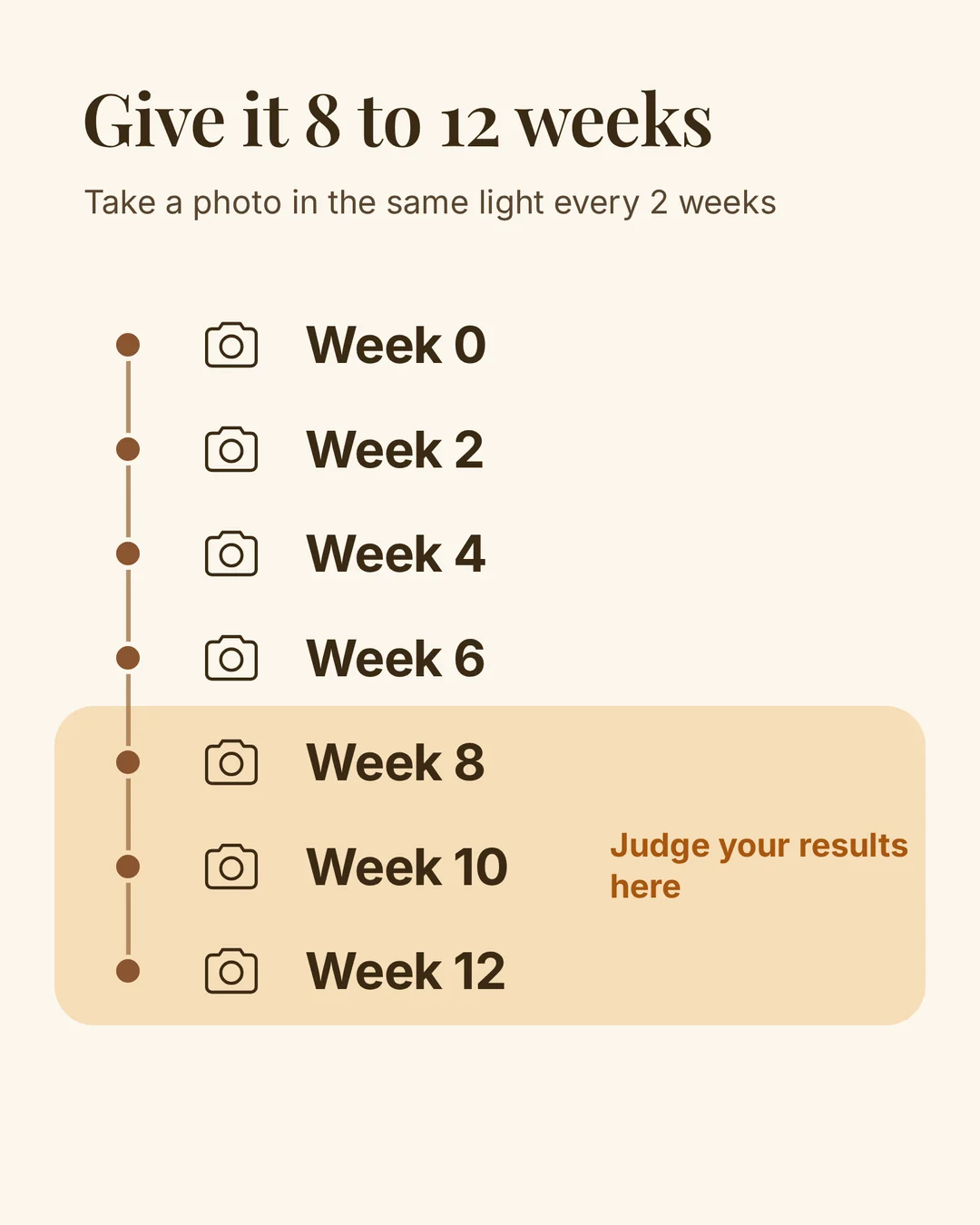
Skin renews slowly. Give any pigmentation routine at least 8 to 12 weeks of consistent use before judging it. Take a photo in the same light every two weeks, because day-to-day changes are almost impossible to see.
When to see a dermatologist
If a patch is spreading, feels different from the skin around it, or hasn’t improved after a few months, get it checked. Some pigmentation needs a prescription approach, and a dermatologist can tell you which kind you’re dealing with. The American Academy of Dermatology also has a clear, free guide to fading dark spots in darker skin tones.
The short version
Pigmentation on Indian skin isn’t a flaw to fix. It’s a sensitive, very active system, and it responds best to gentle care, consistent sun protection and the right actives, given time.
This article is for education and isn’t medical advice.
